Do you need a machine that can perform a thousand trillion calculations per second decimal? Building your own clusters of high-performance computer, or put it more bluntly supercomputer, is a challenge that every little better computer scientist can be overcome with a bit of money spent for a week. Technically speaking, modern, multiprocessor supercomputer consists of a network of computers that work together in order to solve a problem. In this article, we'll briefly cover each of the steps to be taken in order to have built a super computer in your garage
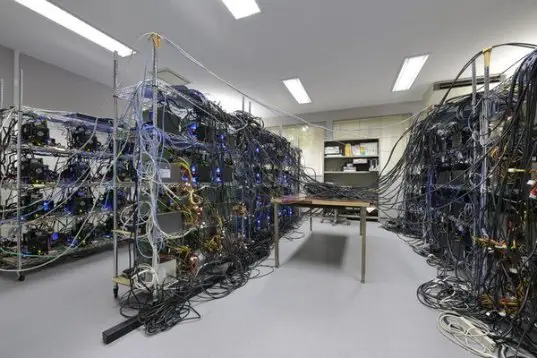
How to make a super computer
First you need to determine the hardware components and the resources you have available. You will need a major node, at least twelve identical nodes, Ethernet switch, power distribution units and base. Determine the volume of power that will be needed, the cooling system and the amount of free space in which to place the supercomputer. You must also specify the IP address that you use in your network, node name, which will install software packages and the technology with which to implement parallel data processing (we'll talk about this later).
Build a computer nodes. Select a server chassis that provides most of the space, and the best cooling efficiency of electricity use. Reliable option is housing with four nodes and two identical power (search the Internet for this type of housing that is available to us). The second, and more likely, option is to use dozens of outdated servers. This will save you a lot of money. All processors, network adapters and motherboard should be identical to that would not be coming to the compatibility problem. Of course, do not forget the RAM and storage space to store each node. You must provide at least one optical ROM for major node.
Install the servers on the stand. Start from the bottom so it is not difficult to stand on the top. Most likely you will need the help of friends in this business because densely mounted servers can be very difficult.
Install an Ethernet switch above the casing server. Take time to configure the switch: set frame size to 9000 bytes of data, set the IP address to a static address that you chose and turn off unnecessary routing protocols such as. STMP snooping.
Install the power distribution unit. Depending on the amount of electricity that will be needed for your nodes at greatest load, you will probably need 220 volts for high performance.
When you install the hardware configuration to deal with. Linux is an operating system that is commonly used for such computer systems. Not only is it an ideal environment for scientific computing research, but you literally do not need a penny to install hundreds or even thousands of nodes. Imagine how much it would cost to install Windows on all the nodes.
Start with installing BIOS on all motherboards (you should use the same BIOS version and if the panels are identical). Install the Linux distribution that you select all nodes. It is important that the version of Linux on the head node has a graphical user interface. Popular choices are CentOS, OpenSUSE, Red Hat Enterprise Linux, and SLES. Probably the best choice seems Rocks cluster distribution.
Install the messaging interface, system resource management, and other necessary libraries. First you will need a portable system manager as Torque Resource Manager, which allows you to share tasks and distribute them on the washing machine. We now need to pair with Torque Maui Cluster Scheduler included to complete the setup of the system. The next step is to install the messaging interface, which is necessary for the individual processing nodes on different computer using the same data. OpenMP is the best choice. Do not forget to multithread libraries and compilers without which we can realize parallel processing on a system.
Networked computing nodes. The main tasks of computing node sends nodes, which must be sent back processing results. Computer nodes also communicate with one another. Use a private Ethernet network to connect all nodes in the cluster. This network must be isolated from the public by ensuring that packets sent by the system will not interfere with other network packets.
Test the cluster. The last thing that you should do before commissioning of the system and is testing its performance. The most popular software package for testing the performance of such systems is HLP benchmark.
Tips
Ganglia are using software to monitor the load on the nodes.
For very high-speed network can use InfiniBand network protocol. If you choose this option, be prepared to set aside a lot of money
Warnings
Make sure that your infrastructure can handle the load.

0 comments:
Post a Comment